When Chatbots Talk and Smile

Thirty five years ago, McDermott described, in his now classical piece, what might happen when Artificial Intelligence Meets Natural StupidityCornell’s Creative Machines Lab recently released a short clip showing what might happen when AI meets AI.

In the video, two chatbots talk to each other, discussing God, philosophy, their robot identity, and other things one would expect two chatbots to discuss. 🙂 The clip is nicely done, showing interesting conversational twists that might occur in AI interaction.

As a researcher of digital nonverbal communication, I found particularly interesting the bots’ gestures and facial expressions incorporated into the conversation. Gender differences are quite obvious (not to say stereotypical), as it is often the case with agents’ precoded nonverbal behavior, but overall integration of nonverbal cues into the conversation seems promising. It will be interesting to follow how the Creative Machines people will further be developing/resolving the question of chatbots’ nonverbal expression.

Celebration of the past, glimpse into the future

Useful and interesting combination of anthropology, archeology, museology, and digital technologies.

“A celebration of the past and a glimpse into the future, Dickson Mounds held an open house on Sunday, Aug. 21.

Approximately 200 visitors were given a chance to look behind the exhibits to see the real work of collecting, processing, and researching the items found on local excavation sites or presented to the museum by collectors donating their artifacts.

Visitors were also able to learn about the digitizing plat map project, as well as hear and ask questions about the history of Dickson Mounds itself courtesy of Alan Harn, Assistant Curator of Anthropology at the museum.

And for the younger ones, the past came alive as they got a chance to make their own masks and rattles, as well as grind corn and operate drills in the same fashion as the earlier inhabitants of the Spoon River Valley area.” Read more

Click on Knowledge Presentation

Last week I attended Click on Knowledge conference, and presented my fieldwork research conducted at fifteen educational and research institutions focused on digital humanities.

The conference featured speakers such as Susan Schreibman and Mark Malseed, and explored a variety of topics relevant for contemporary digital scholarship.

My presentation, Voices from the Field, was co-authored and co-delivered with a colleague from Oxford Internet Institute, Monica Bulger.


Experience Lab launch

Experience Lab has been launched today at Roskilde University (unfortunately, no English version, but Google translate is always around :).

Digital Humanities Course

Wrapped up one of my Spring 2011 courses today,  Introduction to Digital Humanities. We covered five general themes, broadly titled Digital Humanities in Theory, Digital Humanities in Practice, Practices in Digital Humanities, Digital Cultural Heritage, and Developing a Digital Humanities Project; here is a brief course description.

We analyzed a lot of DH projects, such as Hypercities, Old Bailey, Yiddish Sheet Music, Virtual Qumran and Digital Himalaya,  and read literature such as A Companion to Digital Humanities and The Participatory Museum.

A particular highlight of the course was a guest lecture by Mathilde Schytz Marvit, Head of Digital Production at the National Gallery of Denmark.

Guest lecture by Mathilde Schytz Marvit

And, of course, the best thing is that the course ended with a variety of ideas students have developed for their own DH projects.

Participatory Knowledge Production 2.0

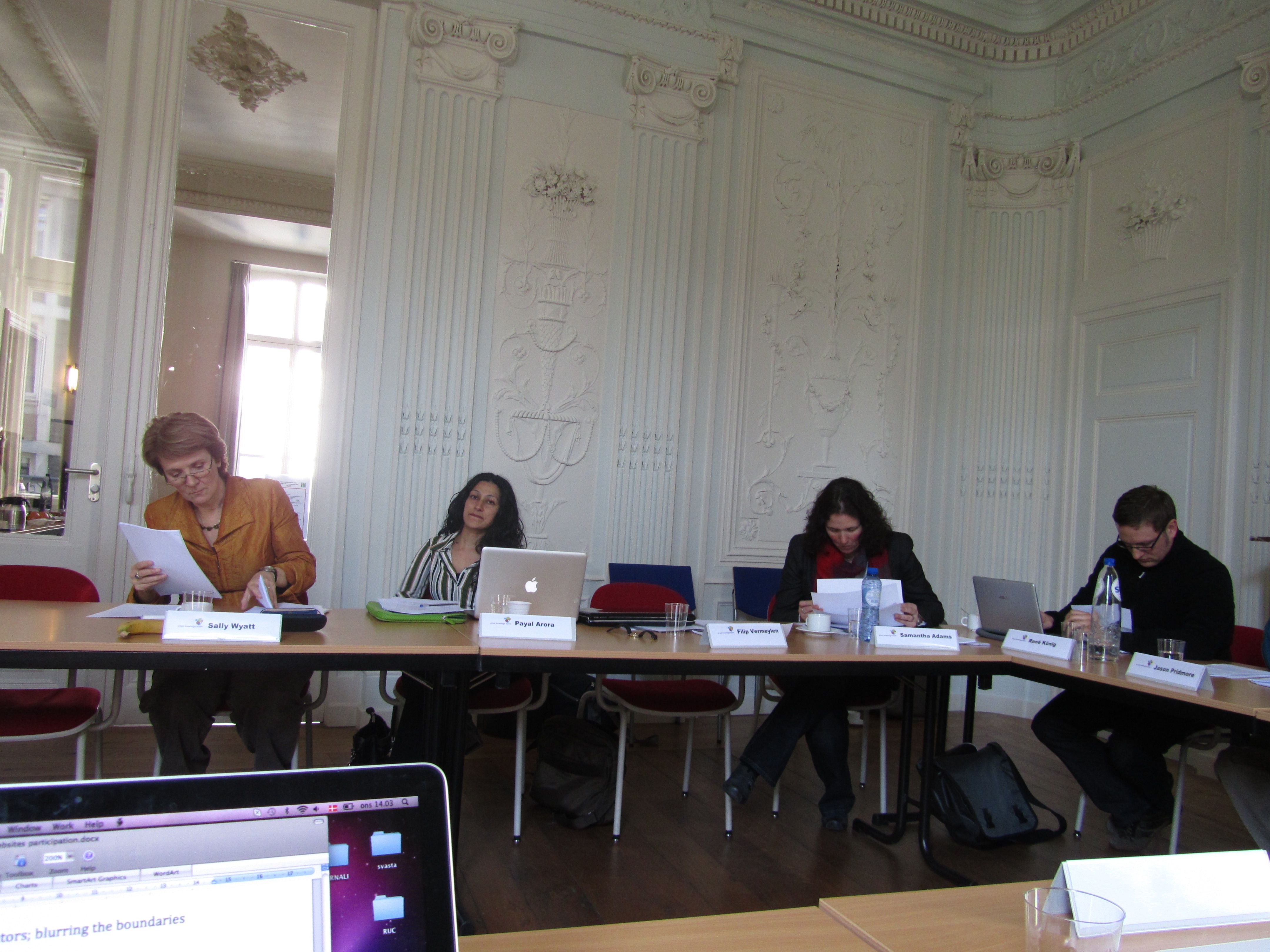
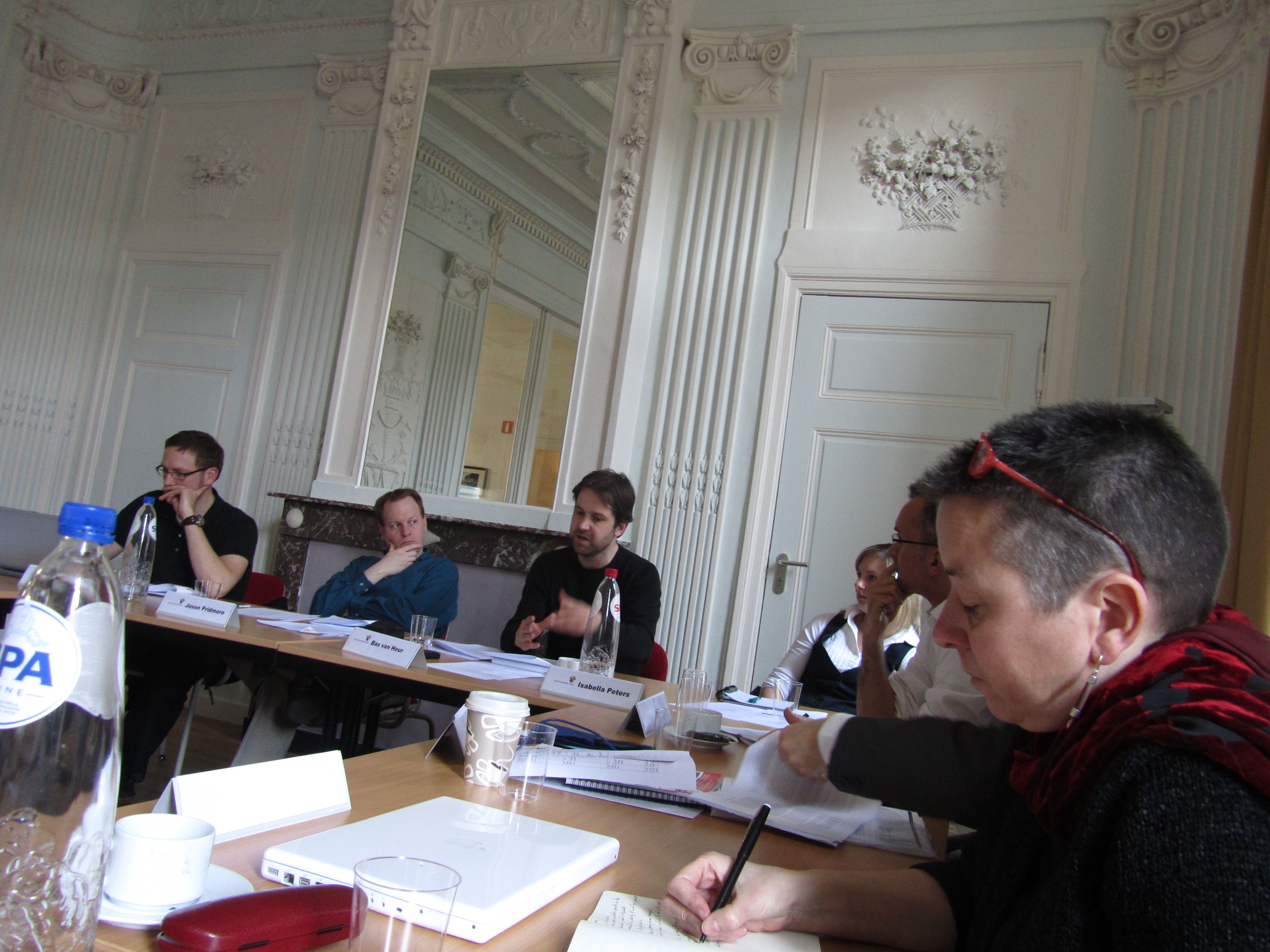
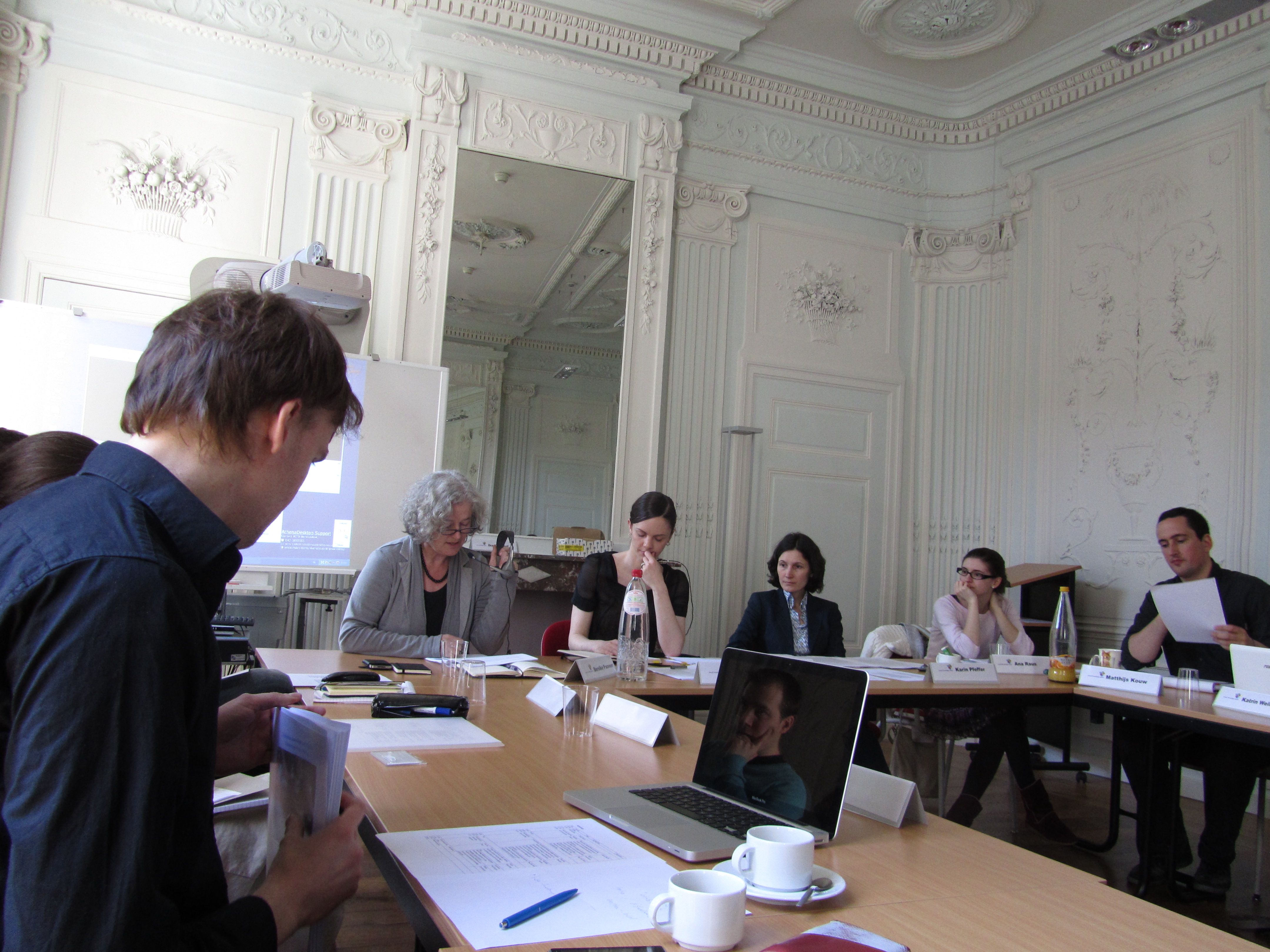
A workshop Participatory Knowledge Production 2.0: Critical views and perspectives was held at Maastricht University on March 23, 2011.

eHumanities and Sal Restivo

eHumanities Group of the Royal Netherlands Academy of Arts and Sciences has moved this week to new offices at Meertens Institute.

Traditional weekly research meeting was thus also held in new premises, and it featured Sal Restivo, professor of sociology, science studies, and information
technology at Rensselaer Polytechnic Institute. A founding member and former president of the Society for Social Studies of Science, and the editor-in-chief of Science, Technology, and Society: An Encyclopedia (Oxford University Press, 2005), Dr Restivo gave a talk “Brains, Robots, and Humans: Reflections on Information and the Neurosociety”.

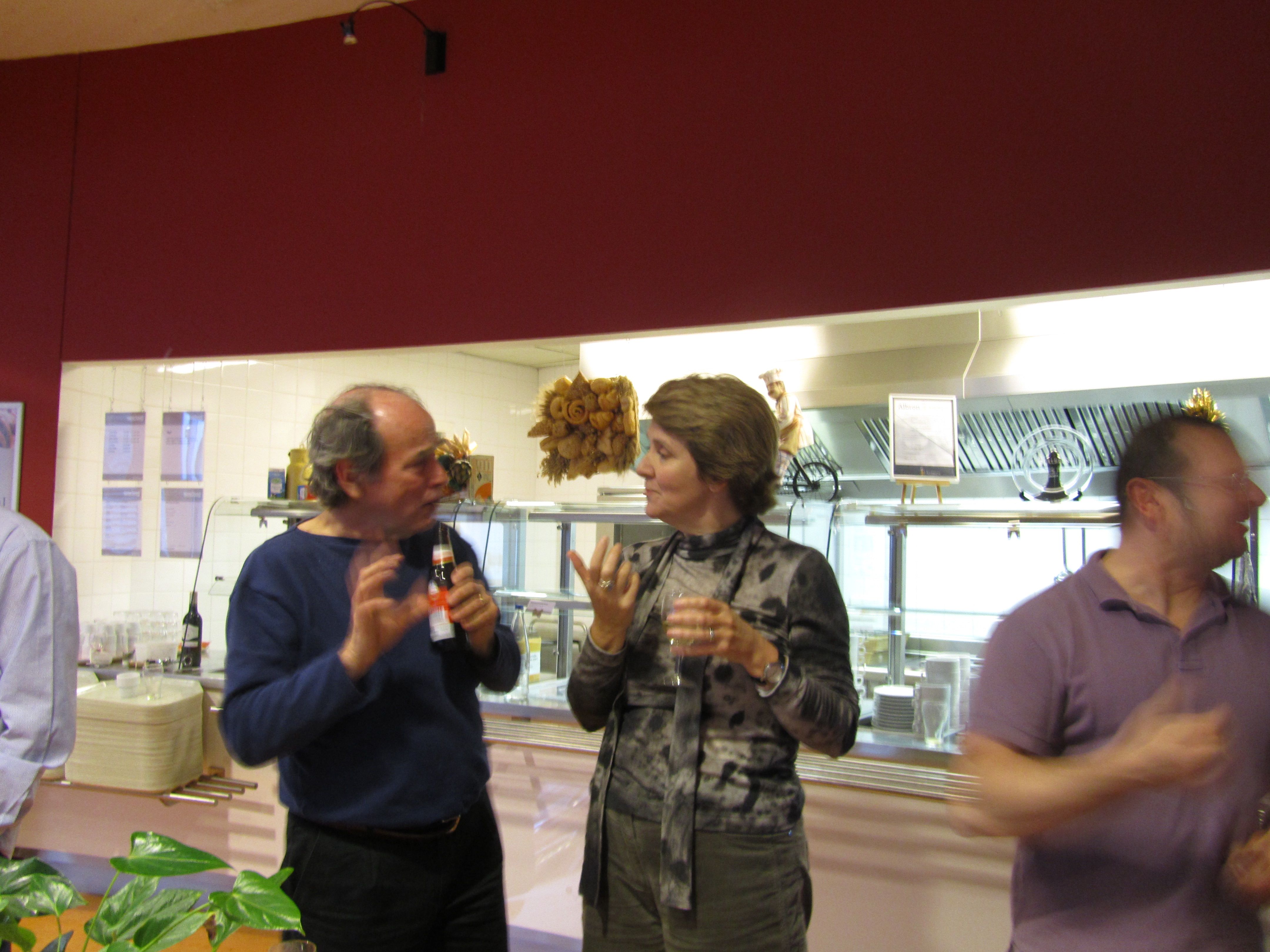
A borrel following the talk helped celebrate the move to new offices and the launch of a new series of research meetings.